
In a coastline known for dramatic tides, ancient rock and remote beauty, Horizontal Falls stands apart. Set within Talbot Bay in the Buccaneer Archipelago, this extraordinary Kimberley landmark is shaped not by a river dropping from a cliff, but by the immense movement of the sea itself.
For guests travelling through the Southern Kimberley with Ocean Dream Charters, Talbot Bay is one of those places that reveals why this coastline is best understood slowly, from the water, with time to take in the scale of the landscape around you.
What are the Horizontal Falls?
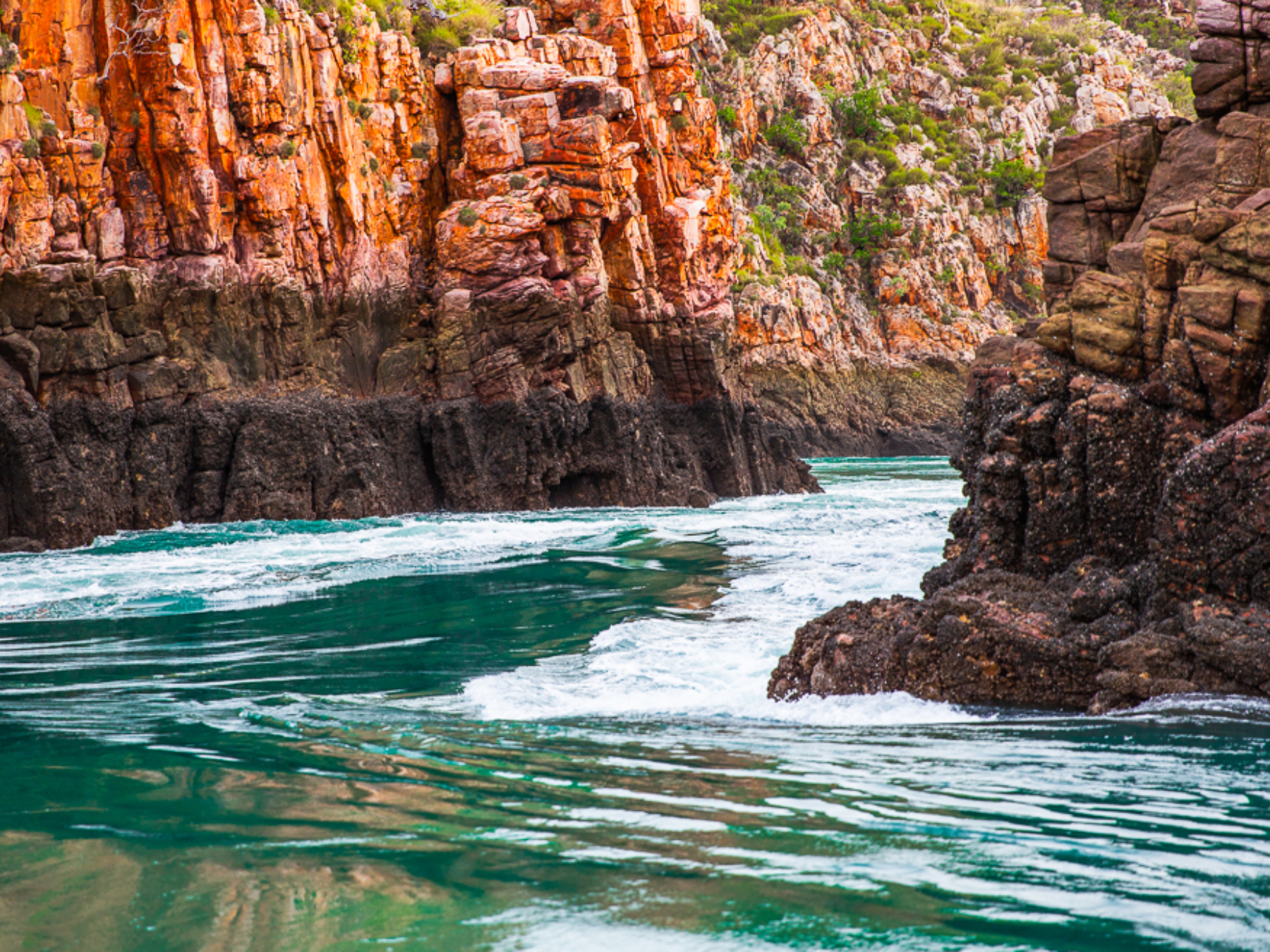
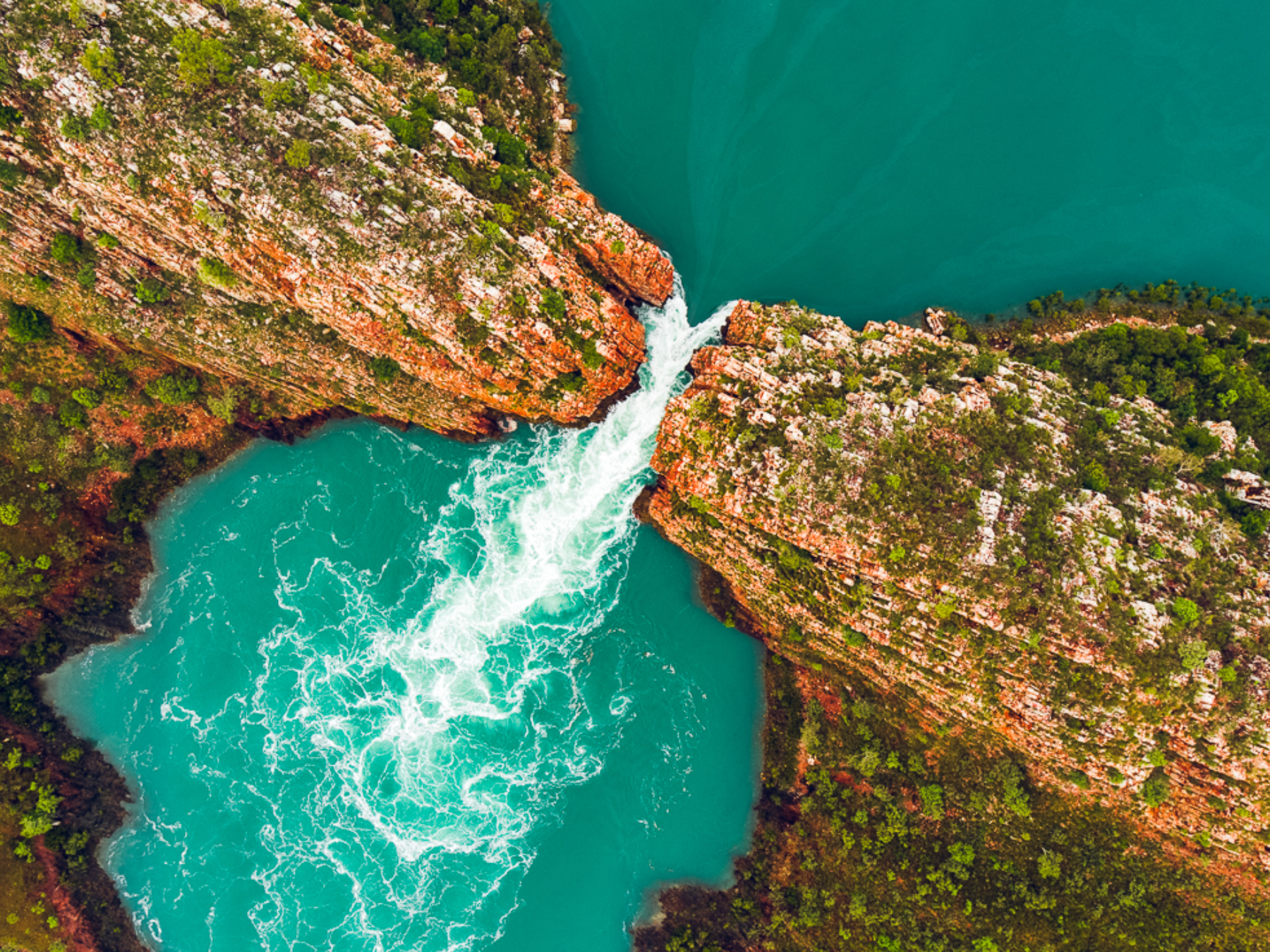
Horizontal Falls, also known as Garaan-ngaddim, is one of the Kimberley’s most remarkable tidal phenomena. Instead of water falling vertically, powerful tides surge horizontally through two narrow gaps in the McLarty Range, creating the appearance of waterfalls flowing sideways.
As the tide moves, seawater builds up on one side of the rock passages and forces its way through the narrow openings. This creates a rushing, churning flow between the bays, with water levels changing rapidly as the tide turns.
The falls are never completely still in the same way twice. Their strength, direction and appearance shift with the tide, the season and the conditions of the day.
Where is Talbot Bay?
Talbot Bay sits in the Buccaneer Archipelago, a remote and striking part of the Kimberley coast north of Derby and east of the Dampier Peninsula. It is a place of rugged sandstone ranges, sheltered bays, mangroves, turquoise water and quiet inlets.
The surrounding landscape is part of the attraction. Before visitors even reach the falls, Talbot Bay offers a powerful sense of scale. Iron-red cliffs rise from the water, narrow channels cut through ancient rock, and the changing tide gives the whole area a sense of movement.
This is not a polished or predictable destination. It is remote Kimberley wilderness, shaped by geology, tides and time.
Why are they called the Horizontal Falls?
The name comes from the way the water appears to fall sideways through the gaps.
Technically, Horizontal Falls is not a waterfall in the traditional sense. There is no river plunging over a high ledge. Instead, it is a tidal waterfall effect, created by seawater being squeezed through narrow rock passages.
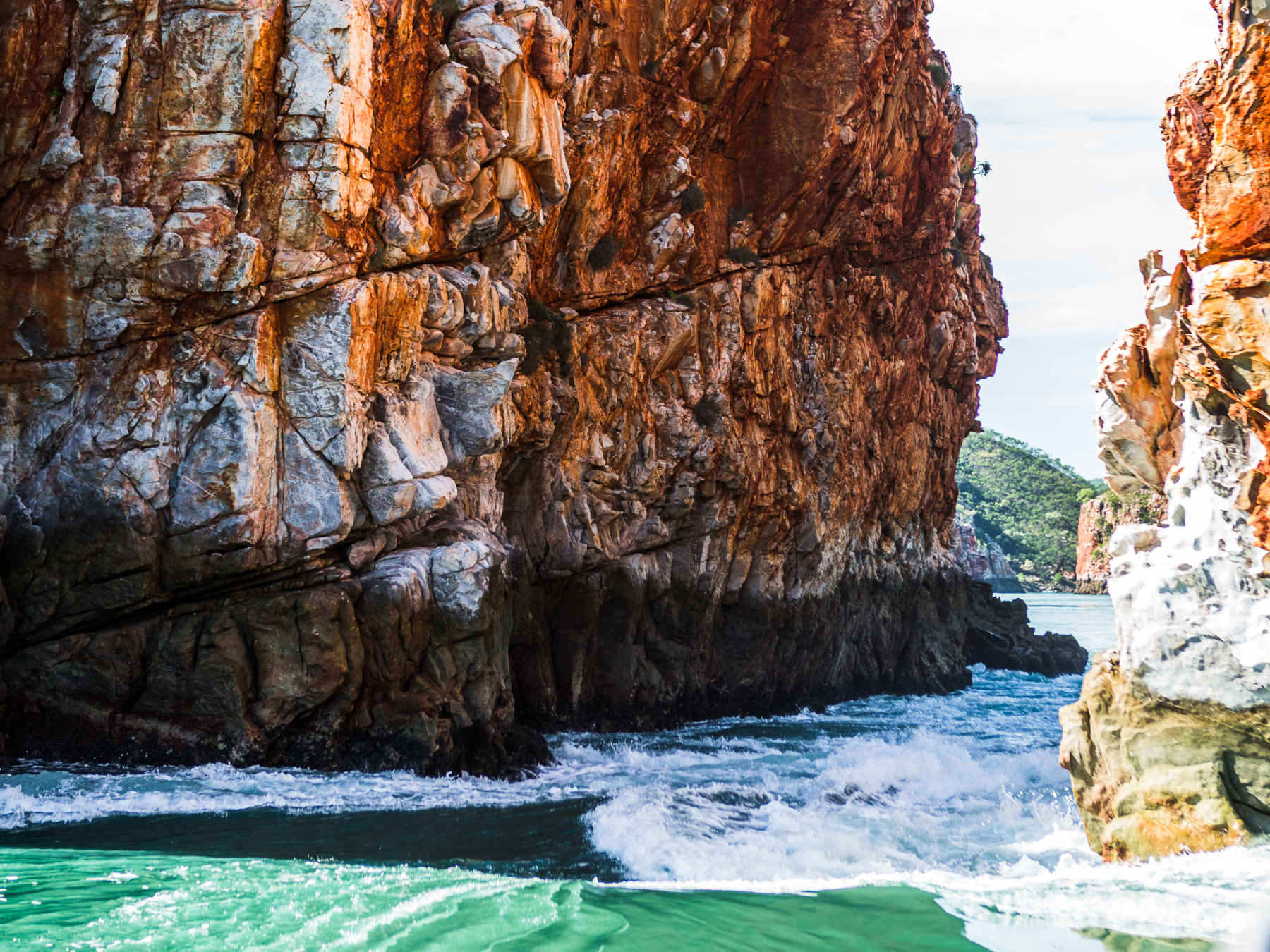
The Kimberley has some of the largest tides in the world. As huge volumes of water move in and out of bays and channels, they meet resistance from the surrounding rock formations. At Talbot Bay, this creates a visible difference in water levels and a powerful rush of water between the gaps.
The result is rare, dramatic and unmistakably Kimberley.
The role of the Kimberley tides
To understand Horizontal Falls, it helps to understand the Kimberley’s tides.
This region is famous for huge tidal movement. On some parts of the coast, the difference between high and low tide can transform the landscape within hours. Reefs appear and disappear. Mudflats open and close. Creeks become navigable, then shallow.
At Horizontal Falls, this tidal energy is concentrated through narrow channels. When the tide is running, water can surge through the gaps with remarkable force. When the tide eases, the same place can feel calmer, allowing visitors to better appreciate the surrounding rock formations and stillness of Talbot Bay.
This is why timing matters. The experience is shaped by the tide, and the tide is always in charge.
Cultural significance of Garaan-ngaddim
Horizontal Falls is more than a natural attraction. Garaan-ngaddim is a culturally significant place for the Dambeemangaddee people and is recognised as a registered Aboriginal sacred site.
Visitors should approach the area with respect. That means understanding that the landscape is not simply scenic. It is part of living Country, connected to stories, cultural knowledge and Traditional Owner custodianship.
This deeper significance is an important part of how the Kimberley should be experienced. The region’s beauty is inseparable from its cultural meaning.
What makes Talbot Bay so memorable?
While Horizontal Falls is the best-known feature, Talbot Bay itself is a destination worth understanding.
The bay brings together many elements that define the Kimberley coast: powerful tides, sheltered waterways, red rock, mangrove edges and a sense of remoteness that is difficult to find elsewhere. The landscape feels both still and constantly changing.
One moment, the water may be glassy and reflective. Later, the tide begins to move and the same channel becomes full of motion. Light changes the colour of the rock through the day, from soft ochre to deep rust and gold. The surrounding cliffs and waterways make the experience feel enclosed, dramatic and deeply atmospheric.
It is this combination of movement and stillness that stays with many visitors.
Can you still visit Horizontal Falls?
Yes, visitors can still experience Horizontal Falls and Talbot Bay, although access and activities continue to be managed with safety, environmental and cultural considerations in mind.
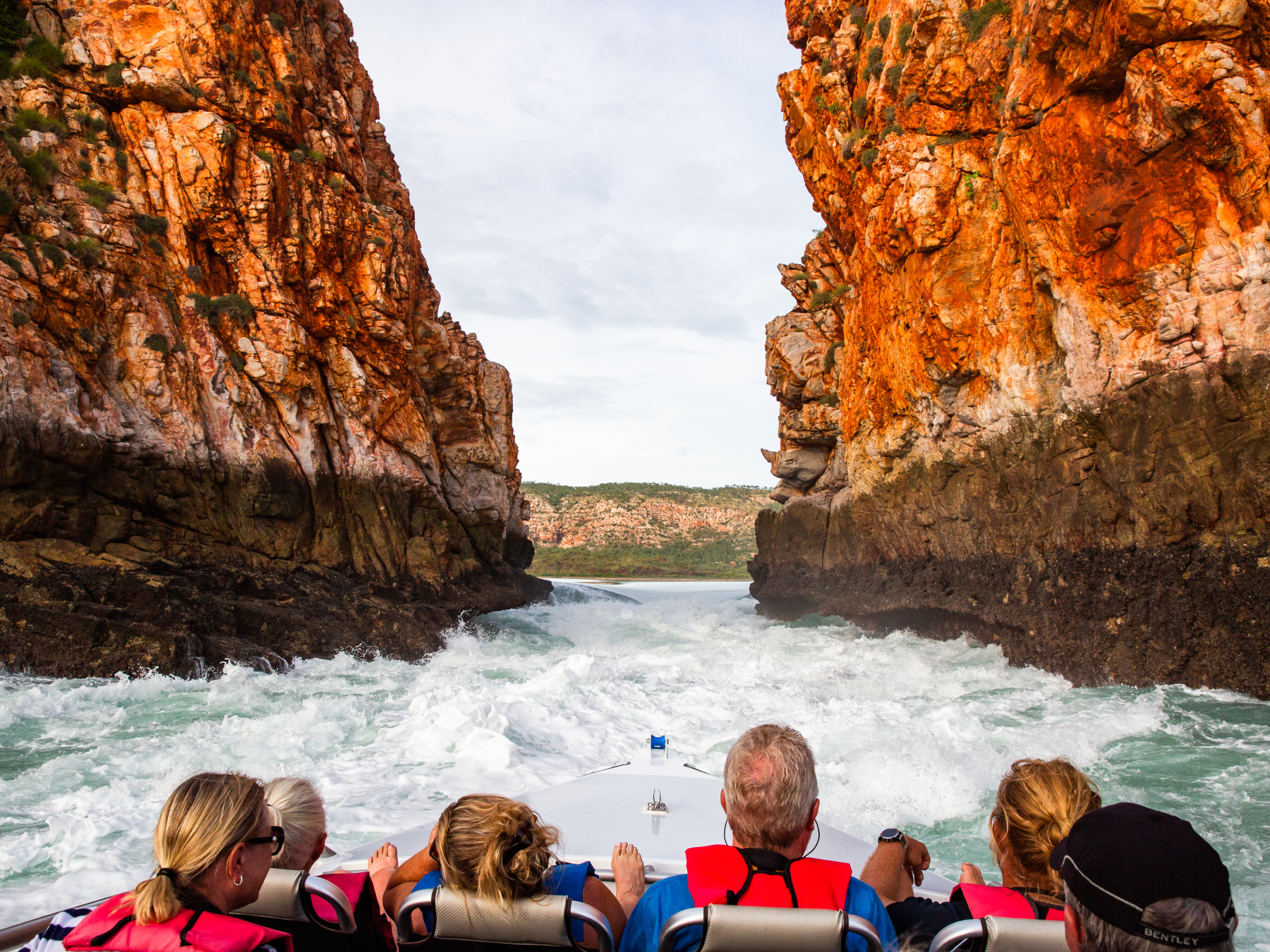
On selected Ocean Dream Charters Kimberley cruises, guests may experience Horizontal Falls by fast boat, subject to tides, conditions and itinerary timing. As with many Kimberley experiences, the exact nature of the visit depends on the day.
In recent years, there has been increasing focus on how the area is visited, including a shift toward more culturally respectful and carefully managed tourism. Because conditions, regulations and operating permissions can change, travellers should always check current information with their tour operator before booking.
For many visitors, the value of the experience is not only about passing through the gaps. It is also about seeing the movement of the tide, learning why the place is significant, and spending time in the surrounding landscape of Talbot Bay.
A place shaped by water, rock and time
Horizontal Falls is one of the Kimberley’s most recognisable natural wonders, but its power comes from more than spectacle. It is a reminder of how alive this coastline is.
Here, the sea does not simply meet the land. It moves through it, reshapes it, reveals it and hides it again. The tide creates the drama, but the surrounding landscape gives the experience its depth.
For travellers seeking to understand the Kimberley, Talbot Bay offers a clear lesson: this is a place best approached with patience, respect and wonder.
Plan your Kimberley Journey
To experience Horizontal Falls, Talbot Bay and the remote beauty of the Kimberley coast in comfort, explore Ocean Dream Charters’ Kimberley cruise itineraries or speak with the team about the journey that best suits your travel plans.
FAQs
Why are Horizontal Falls considered unusual?
Horizontal Falls is unusual because the waterfall effect moves sideways rather than vertically. It is created by powerful tidal water rushing through narrow gaps in the rock, rather than by a river dropping from height.
Are the Horizontal Falls the same every day?
No. The appearance and strength of Horizontal Falls change with the tide, season and conditions. The direction of flow also changes as the tide moves in and out.
Can tour operators still traverse Horizontal Falls?
Yes. Existing licensed commercial tour operators can continue to traverse the wide gap at Garaan-ngaddim Horizontal Falls under their existing licence conditions until the end of the 2028 tourism season. This extension is part of a wider transition toward more culturally appropriate and sustainable tourism experiences, developed with the Dambimangari Aboriginal Corporation and the Western Australian Government.
Is Horizontal Falls culturally significant?
Yes. Garaan-ngaddim, also known as Horizontal Falls, is culturally significant to the Dambeemangaddee people and is recognised as a registered Aboriginal sacred site.