
In the shaded rock shelters of the Kimberley, painted faces look out across Country.
Some are broad-eyed and haloed. Others seem to emerge from the stone itself, their pale forms shaped by time, weather and ochre. Many are shown without mouths, one of the most recognisable features of Wandjina figures and a powerful reminder of their spiritual significance to the living cultures of the north-west Kimberley.
For travellers, seeing Kimberley rock art is not simply another stop along the coast. It is a quiet, humbling encounter with one of Australia’s most culturally rich regions, where story, law, place and ancestry are held within the landscape.
Rock art in the Kimberley
The Kimberley is one of the world’s richest rock art regions, with ancient galleries found across sandstone shelters, caves, escarpments and remote coastal sites.
Wandjina and Gwion Gwion are two of the region’s most distinctive traditions. Some galleries can be reached inland, while many remote coastal sites are accessed by Kimberley Coast cruise, scenic flight or coastal lodge, making each visit feel closely tied to the landscape around it. This broader regional context is also highlighted by Australia’s North West.
The experience is shaped by more than the painting itself. The surrounding stone, sea country, birdsong, changing light and stillness all contribute to the sense that these works belong deeply to place.
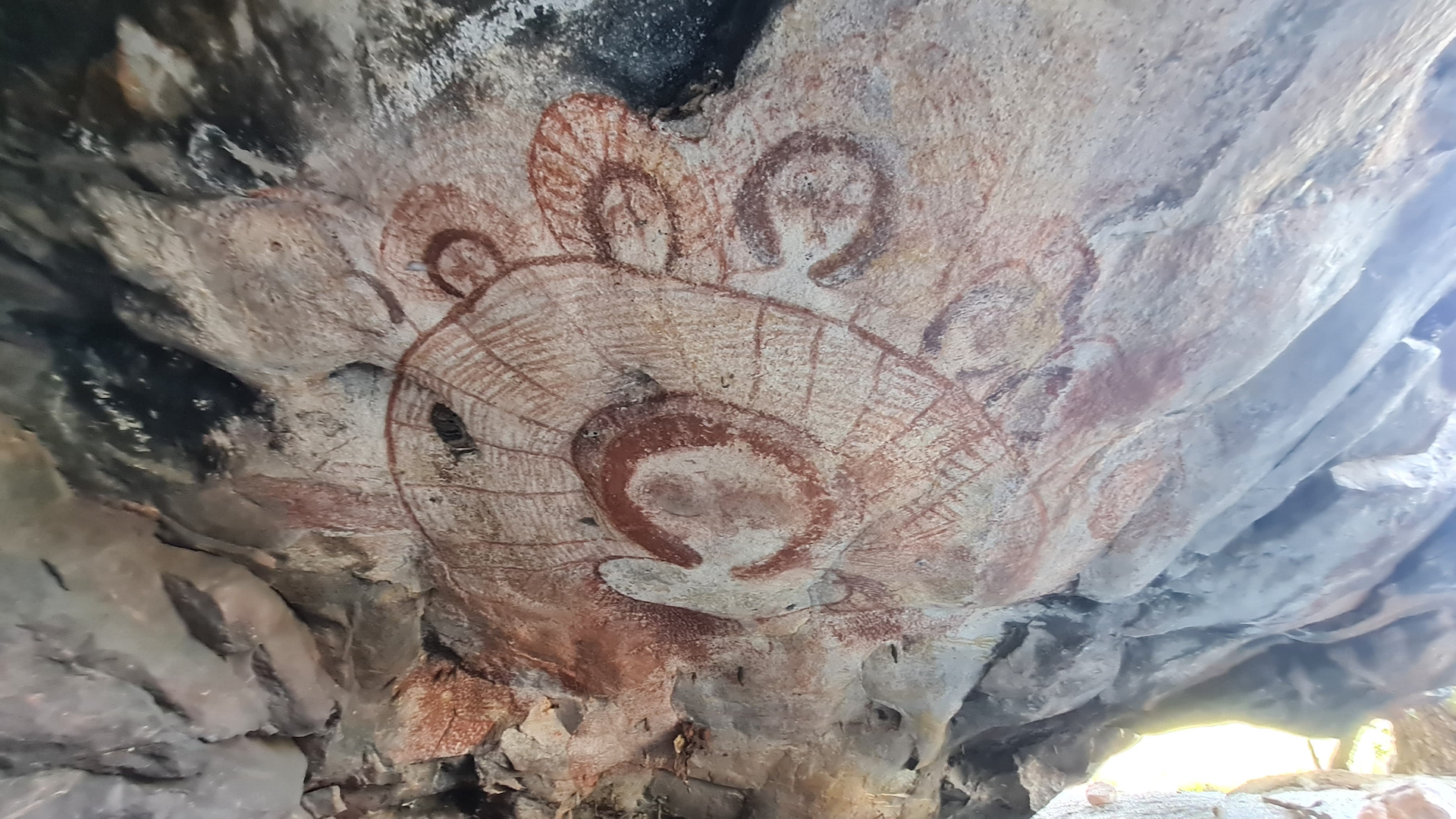
What makes Wandjina rock art distinctive?
Wandjina figures are often striking in appearance. They may have pale faces, large dark eyes and a rounded or halo-like form around the head. Many are shown without mouths, a feature commonly associated with their spiritual power.
Wandjina are connected with ancestral stories, creation, rain, weather and the renewal of life. For visitors, this means the art should never be viewed as simply decorative or historic. It remains significant to Traditional Owners today.
Because the Kimberley includes many language groups and cultural areas, meanings, responsibilities and access can vary from place to place. The most respectful approach is to follow local guidance, stay within approved visitor areas and understand that not every story or site is available to the public.
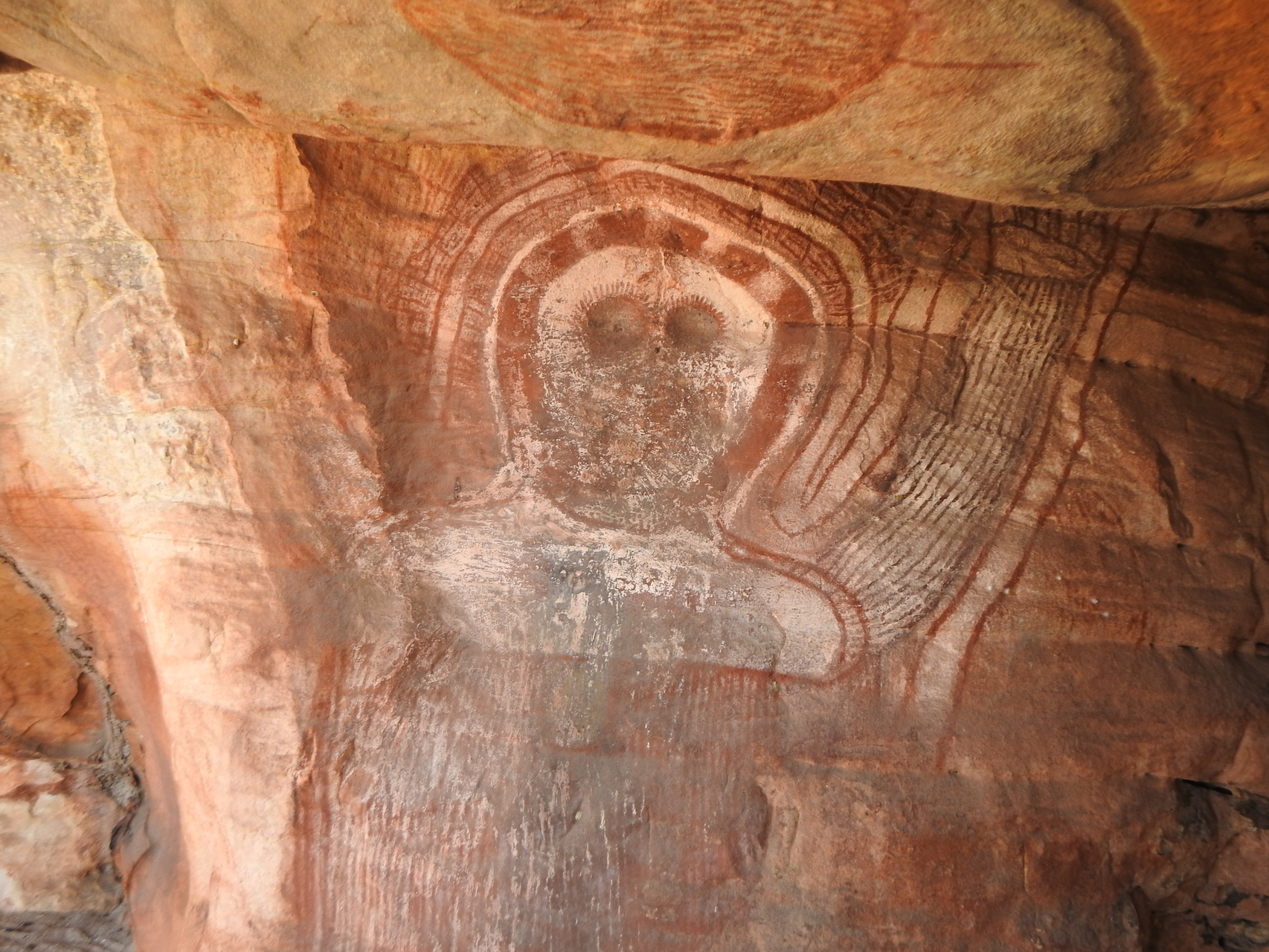
Wandjina and Gwion Gwion: What is the difference?
For many visitors, one of the most interesting parts of Kimberley rock art is noticing how different the styles can be.
Wandjina art often feels bold, still and powerful. The figures are usually more frontal, with strong facial features and a commanding presence.
Gwion Gwion art is generally finer and more detailed, often showing slender human forms with intricate decoration. Scientific dating of mud wasp nests associated with some Gwion Gwion paintings suggests many figures are around 12,000 years old, with one motif dated to approximately 17,000 years. You can read more about this research through the Australian Research Council.
Both traditions are culturally important. Together, they show the depth and complexity of Kimberley rock art, and the region’s long relationship between people, story and place.
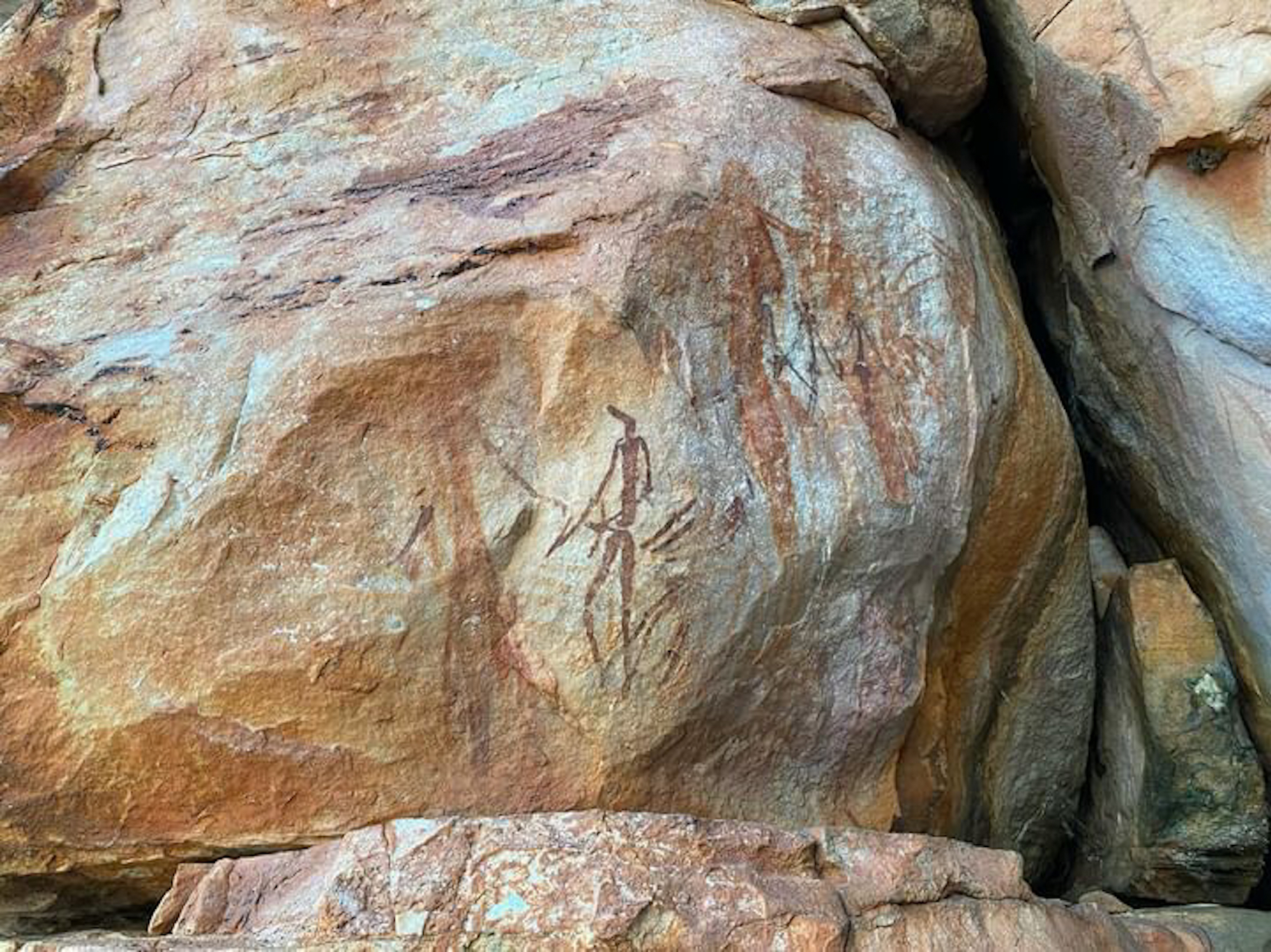
Where guests may see rock art in the Kimberley
Kimberley rock art is often found in remote coastal settings, sandstone shelters, caves and escarpments. Some sites are reached by water, others on foot, and access can depend on tides, weather, cultural permissions and safety conditions.
On selected Kimberley cruises, guests may have the opportunity to visit rock art locations such as Jar Island, Bigge Island, Swift Bay and Montague Sound. These visits are shaped by the region itself, so they are never rushed or treated as guaranteed sightseeing stops.
The most memorable experiences are often simple: stepping ashore, walking carefully through the landscape, and seeing the art in the place it belongs.
Jar Island and Vansittart Bay
Jar Island, reached from Vansittart Bay on selected Kimberley itineraries, is known for Gwion Gwion rock art. The setting gives guests a chance to see this fine, detailed style in its natural context, surrounded by the stone, light and coastline that help give the art its presence.
Vansittart Bay also carries more recent history, including the site of a DC3 aircraft that crashed in 1942. The contrast between ancient rock art and twentieth-century history gives the area a strong sense of layered time.
Bigge Island
Bigge Island lies within the Bonaparte Archipelago, approximately six kilometres off the Kimberley coast. Its sandstone shelters hold important Aboriginal rock art connected to the Wunambal Gaambera people, making it one of the most meaningful cultural stops on selected Kimberley journeys.
The setting adds to the experience. Reef-fringed bays, quiet landing places and wide coastal views give guests time to absorb the significance of the site and the enduring connection between culture, land and sea.
Swift Bay
Swift Bay is a culturally significant location in the north Kimberley, with a long history as an important meeting place for Aboriginal people.
Its rocky shoreline, sheltered waters and remote coastal setting help guests appreciate how closely cultural places are tied to their surroundings. When conditions allow, time spent here can offer a quieter perspective on the Kimberley, beyond its waterfalls and dramatic cliffs.
Montague Sound
Montague Sound is another area where visitors may encounter Kimberley rock art, including both Gwion Gwion and Wandjina styles. Some sites in this area include maritime themes, reflecting the strong connection between the art and the sea country around it.
For travellers interested in Aboriginal rock art, this can be a valuable opportunity to see different traditions within the same broader region.
Visiting rock art respectfully
Aboriginal rock art sites are culturally significant places. They should be approached with care, patience and respect.
Visitors should avoid touching the paintings or surrounding rock, as even a light touch can leave oils or marks that may damage fragile surfaces over time. It is also important to stay with guides, remain within approved areas and follow any site-specific instructions.
Photography may be permitted at some locations, but not all. Always ask before taking photos, avoid flash where requested, and follow any guidance about what can and cannot be photographed. Some places, stories or details may be culturally sensitive.
Not every place is open to visitors. Some sites may be restricted, some stories may not be shared publicly, and access may change depending on cultural, environmental or safety considerations.
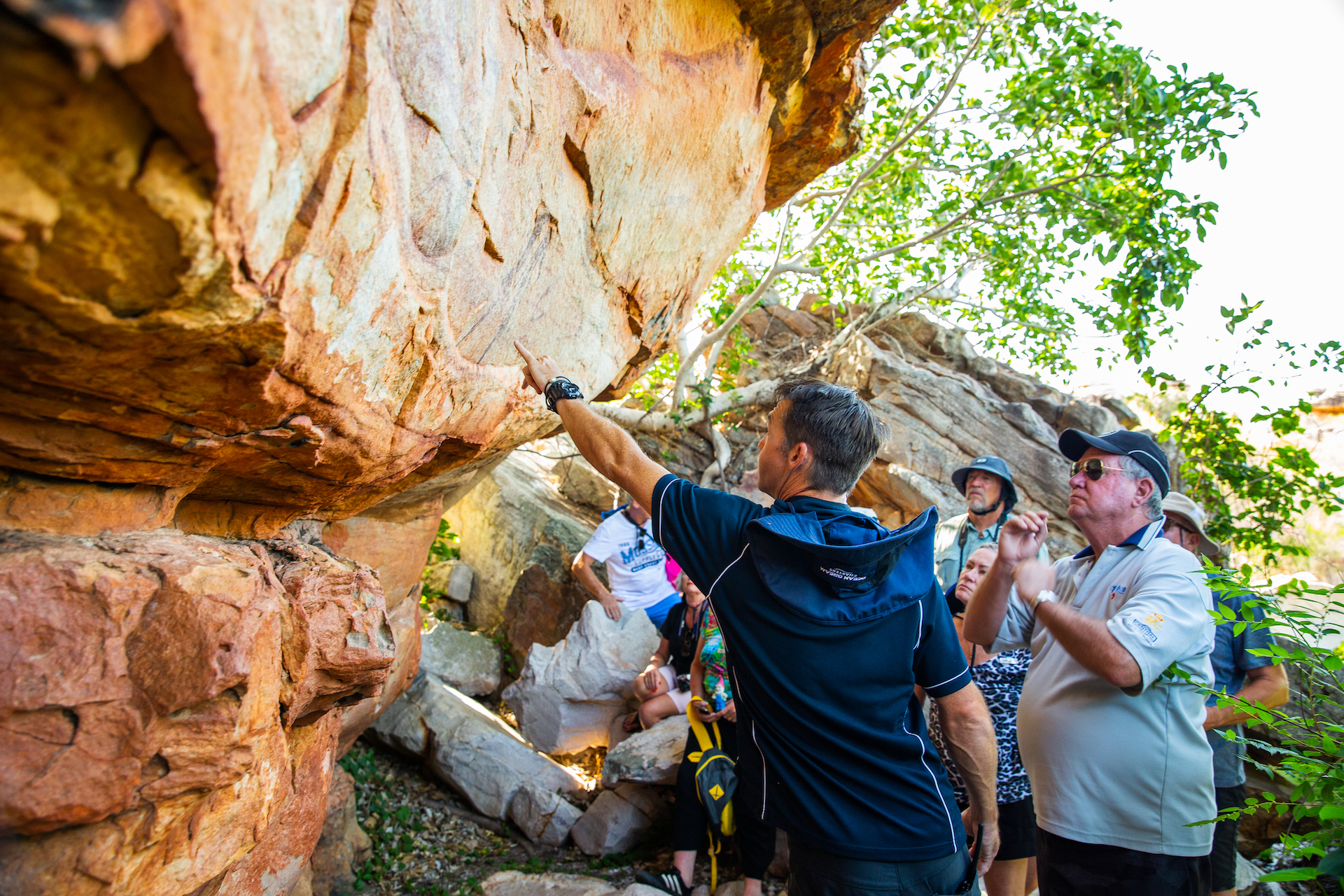
Why Kimberley rock art stays with you
The Kimberley is often remembered for its scale: immense tides, high waterfalls, red cliffs and wide river systems. Rock art offers something quieter, but no less memorable.
Standing before a Wandjina or Gwion Gwion figure, the landscape becomes more than scenery. The stone, shade and silence feel connected, revealing the Kimberley as a place shaped by story, ancestry and enduring custodianship.
For travellers seeking a deeper understanding of the region, these encounters invite stillness, curiosity and a more thoughtful way of seeing.
FAQ
Is Kimberley rock art still culturally significant today?
Yes. Kimberley rock art is part of a living Aboriginal cultural landscape. Many sites remain deeply significant to Traditional Owners, and visitors should approach them with care and awareness that not all stories or places are shared publicly.
Can all Kimberley rock art sites be visited by the public?
No. Some rock art sites are open to visitors with appropriate access, while others may be restricted for cultural, environmental or safety reasons. Access can also depend on tides, weather and local guidance.
Why is Kimberley rock art considered so important?
Kimberley rock art is significant because it reflects one of the world’s oldest continuing cultural landscapes. Wandjina and Gwion Gwion traditions offer insight into ancient storytelling, connection to place and the depth of Aboriginal cultural heritage in the region.