
The Kimberley Coast is one of Australia’s most extraordinary marine environments. Its vast tides, reef systems, mangrove-lined creeks, estuaries and warm tropical waters create rich habitat for marine life, from turtles and rays to dolphins, dugongs, fish and sharks.
For guests travelling through the Kimberley with Ocean Dream Charters, wildlife is part of the wonder of the journey. Sightings are never guaranteed, but the region’s waters are alive with movement, and sharks are an important part of this remote coastal ecosystem.
Why sharks matter in the Kimberley
Sharks are often misunderstood, yet they play a vital role in healthy marine environments. As predators and scavengers, they help maintain balance by feeding on fish and other marine animals, and by removing weaker or sick animals from the ecosystem.
In a region as remote and naturally dynamic as the Kimberley, sharks move through reef systems, coastal waters, channels, river mouths and tidal areas, depending on the species and conditions.
The Kimberley is not a place of still water. Its tides can reshape the coastline from hour to hour, exposing reef platforms, filling creeks and drawing marine life into different areas. This constant movement is one of the reasons the region supports such varied wildlife.
Shark species found in the Kimberley
A number of shark species are associated with northern Western Australian waters. Some are more commonly linked with reefs and shallow coastal areas, while others are larger, wide-ranging predators.
Blacktip Reef Shark
Blacktip Reef Sharks are often found in warm, shallow reef environments. They are named for the dark markings on the tips of their fins and are known for their quick, agile movement through tropical waters.
They usually feed on reef fish, squid and crustaceans. In healthy reef systems, blacktip reef sharks can be part of the natural rhythm of the underwater world.
Zebra Shark
Zebra sharks are distinctive, slow-moving sharks often found around coral reefs and sandy sea floors. Although the name suggests stripes, adult zebra sharks are usually recognised by their spotted pattern. Juveniles have darker stripes, which is where the name comes from.
They feed on small marine animals such as molluscs, crustaceans and fish. Their gentle movement and unusual appearance make them one of the more recognisable shark species for people interested in marine life.
Bull Shark
Bull sharks are powerful and adaptable. They are known for their ability to move between saltwater and freshwater environments, which makes them especially relevant in regions where rivers, estuaries and coastal waters are closely connected.
In the Kimberley, where large tides influence river mouths and mangrove systems, the idea of a shark that can tolerate different water conditions is particularly fascinating. Bull sharks are strong predators and are best respected from a distance.
Tiger Shark
Tiger sharks are one of the larger shark species found in northern Australian waters. They are named for the faint vertical markings that are most visible on younger sharks.
They are opportunistic feeders with a varied diet that can include fish, rays, turtles and other marine animals. Like other large predators, tiger sharks have an important place in the marine environment.
Sharks and the Kimberley food web
The Kimberley is one of the few places where conversations about marine predators often include both sharks and saltwater crocodiles. These animals are very different, but their habitats can overlap around coastal waters, tidal creeks, river mouths and mangrove areas.
Rather than thinking of these predators in isolation, it is more useful to see them as part of the Kimberley’s natural order. This is a region shaped by ancient geology, dramatic tides, monsoonal weather and a rich web of life on land and in the water.
Sharks are one part of that story. Their presence is a reminder that the Kimberley remains a genuinely wild coastal environment.
Where sharks may be seen in the Kimberley
Shark sightings depend on the season, tide, location, water clarity and the behaviour of the animals themselves. In the Kimberley, marine life is often observed around reefs, channels, bays, river mouths and areas where tides concentrate fish and other prey.
Montgomery Reef is one example of a place where the moving tide can reveal the scale and energy of the Kimberley marine environment. As the tide falls, parts of the reef platform appear to rise from the water, with marine life moving through channels and pools as conditions change. Ocean Dream’s Kimberley itinerary material notes that fish, turtles, manta rays, sharks and dugongs may be seen around Montgomery Reef as their habitat changes with the tide.
As with all wildlife encounters, shark sightings should be treated as a possibility rather than an expectation. The value of travelling through the Kimberley is not only in seeing one particular animal, but in understanding how the whole environment works together.
Are Kimberley sharks dangerous?
Sharks are wild animals and should always be treated with respect. Some species found in northern Australian waters are large predators, and the Kimberley is a remote region where conditions can change quickly.
The safest and most responsible approach is simple: observe wildlife from an appropriate distance, follow local guidance, and listen to experienced crew or guides when travelling in remote coastal areas.
It is also important not to reduce sharks to fear alone. Their presence reflects a marine environment that is still active, powerful and connected.

Seeing the Kimberley’s marine life by cruise
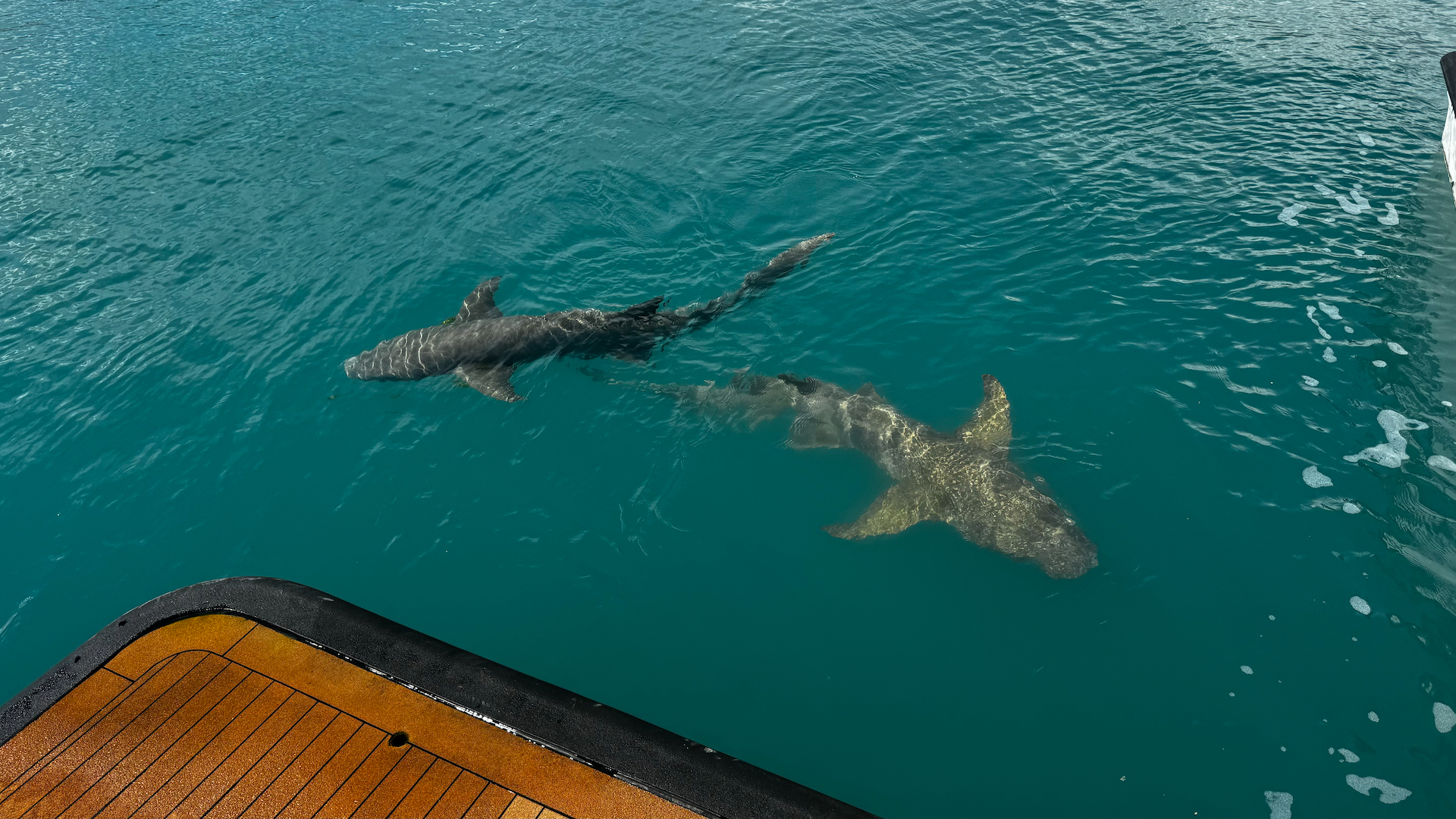
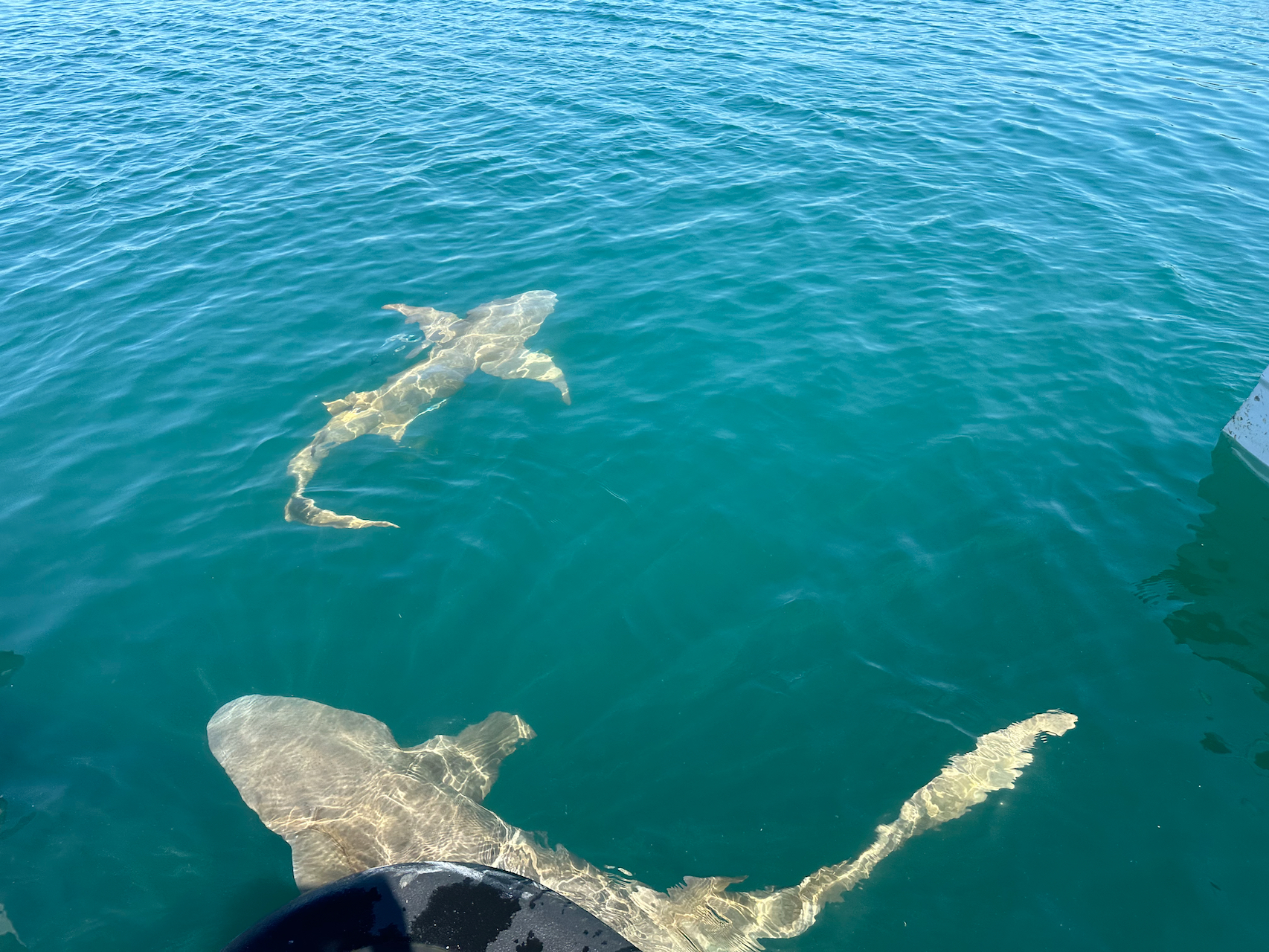
A Kimberley cruise offers a rare way to observe the region’s coastal environments from the water, including reefs, tidal channels, bays, mangroves and river systems. From the deck or on guided tender excursions, guests may see signs of marine life moving with the tides, from turtles and rays to fish, dolphins, dugongs and, occasionally, sharks.
Ocean Dream Charters’ cruises are shaped by tide, weather and conditions, which is especially important in a region with large tidal variation. The experience is less about fixed wildlife promises and more about being present in a remote environment where each day can reveal something different.
FAQ
Do sharks live in Kimberley rivers?
Some shark species, such as bull sharks, can tolerate both saltwater and freshwater. This means they may move through estuaries, river mouths and tidal river systems, particularly where there is a connection to the sea.
What should you do if you see a shark in the Kimberley?
Stay calm, keep your distance and follow the guidance of your crew, guide or local authority. Sharks are wild animals and should never be approached, fed or disturbed.
Are reef sharks aggressive?
Reef sharks are generally not considered aggressive towards people when left undisturbed. Like all wildlife, they should be respected and observed from a safe distance.
Why are sharks more active around tides?
Tides can move fish, nutrients and other marine animals through channels, reefs and shallow areas. Sharks may follow these movements because tides can create feeding opportunities.